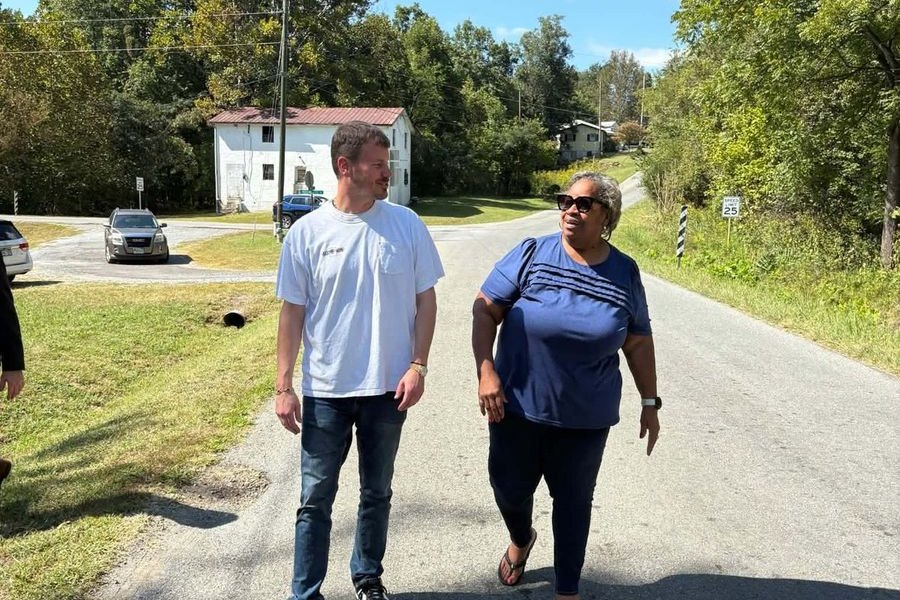
Sandra Poindexter Smith walks up Diamond Avenue alongside Rocky Mount Mayor Holland Perdue. A gentle breeze hints at the coming fall, but the heat of the September sun reminds that summer has not yet let go.
The two talk casually as they head toward an old bridge that connects Smith’s neighborhood to the rest of Rocky Mount.
As they walk, a pickup truck barrels down the hill and thunders across the aging structure.
The bridge barks, groans, and barks in agony each time a vehicle crosses it, and even though the neighborhood is small, a good amount of traffic comes in and out daily.
A couple more vehicles come through as Smith and Perdue approach the edge of the bridge.
Perdue walks out onto the structure and can feel the bridge react as another car crosses.
Smith, however, stops about a foot from the bridge, close enough to see the weathered, wooden decking and rusting metal beneath it.
But she will not walk on it or cross it.
“I’m scared to step on it,” she tells the mayor.
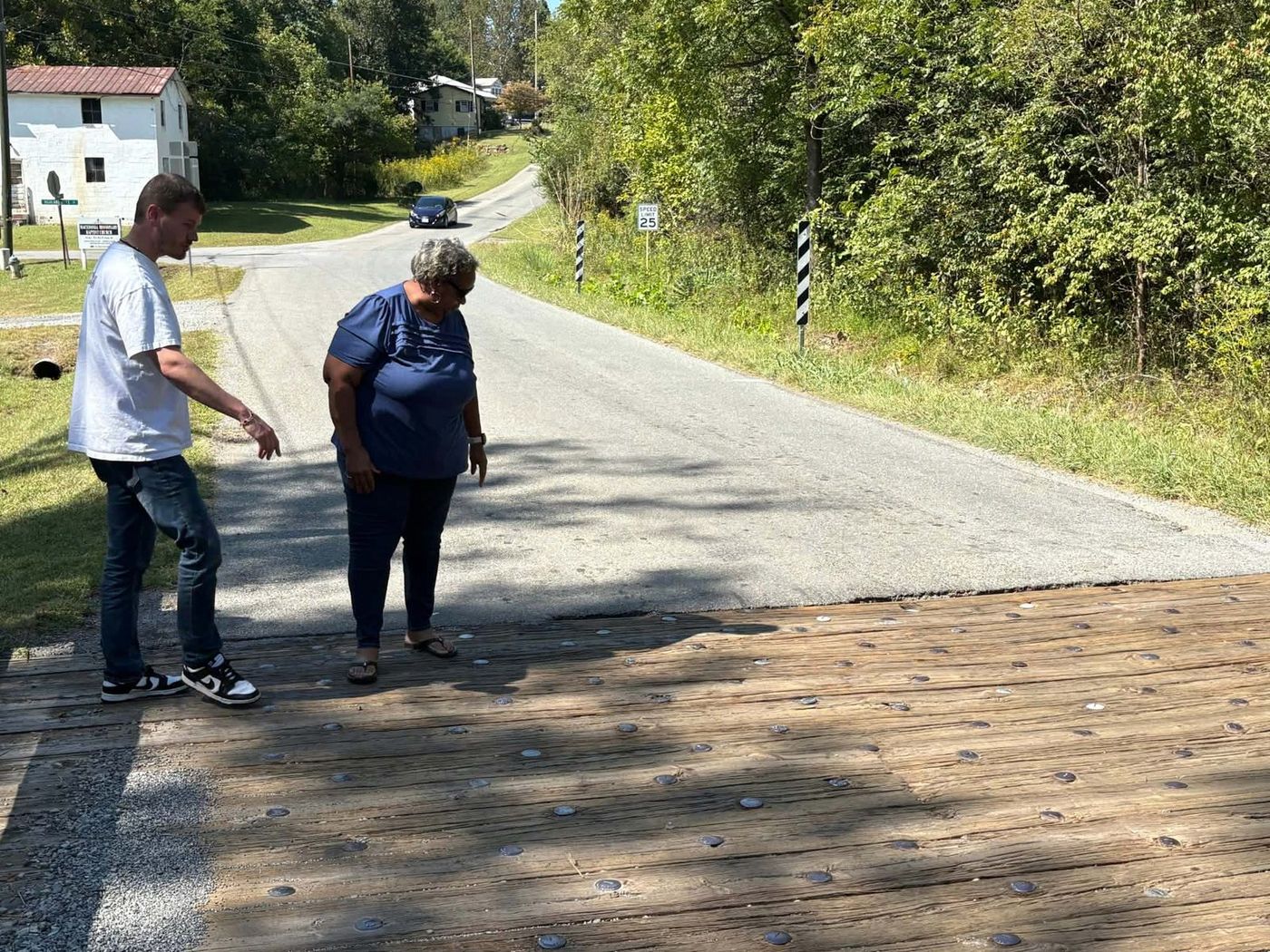
Fortunately for Smith, she is able to choose whether she walks on the bridge.
Driving, however, is another matter.
For Smith and others living in the Highland Hills/Diamond Avenue Extension area, the bridge is part of the only conventional way in or out of the neighborhood.
Cross it to get out, and another potential obstacle waits only yards away: a Norfolk Southern railroad crossing.
There is no second street residents can take if the bridge becomes impassable.
There is no alternate entrance if a stopped or disabled train blocks the tracks.
There would be no conventional way for first responders to access the neighborhood while a train blocked the crossing.
One road. One bridge. One railroad crossing.
For decades, residents say they have asked and begged for another way out.
They are still waiting.
One way in, one way out
The neighborhood sits just outside the heart of Rocky Mount, but another street lies surprisingly close.
Diamond Avenue crosses the railroad tracks, passes over the rickety bridge, and continues into the Highland Hills area. What is less obvious is that, in places, Diamond Avenue runs quite close to Sycamore Street. In some cases, the two roads sit about 100 yards from each other.
Although Sycamore is tantalizingly close to Diamond, it is not part of the neighborhood, and the two streets are not connected by a public road.
Sycamore actually begins on North Main St. beside Mama Sarah’s Soul Food restaurant (also referred to as the Old KFC) and winds its way all the way back to the edge of the Grassy Hill Preserve. Along the way and toward the end of the road, there appear to be several potential ways the two roads could connect.
For now, however, there are mostly discussions, embryonic plans, and a vast lack of funding to make any of it a reality.
That lack of a second entrance or exit—or redundancy, as it is officially called—has become a central public-safety concern for residents. For them, it’s the lives, safety, and well-being of those living beyond the tracks and bridge.
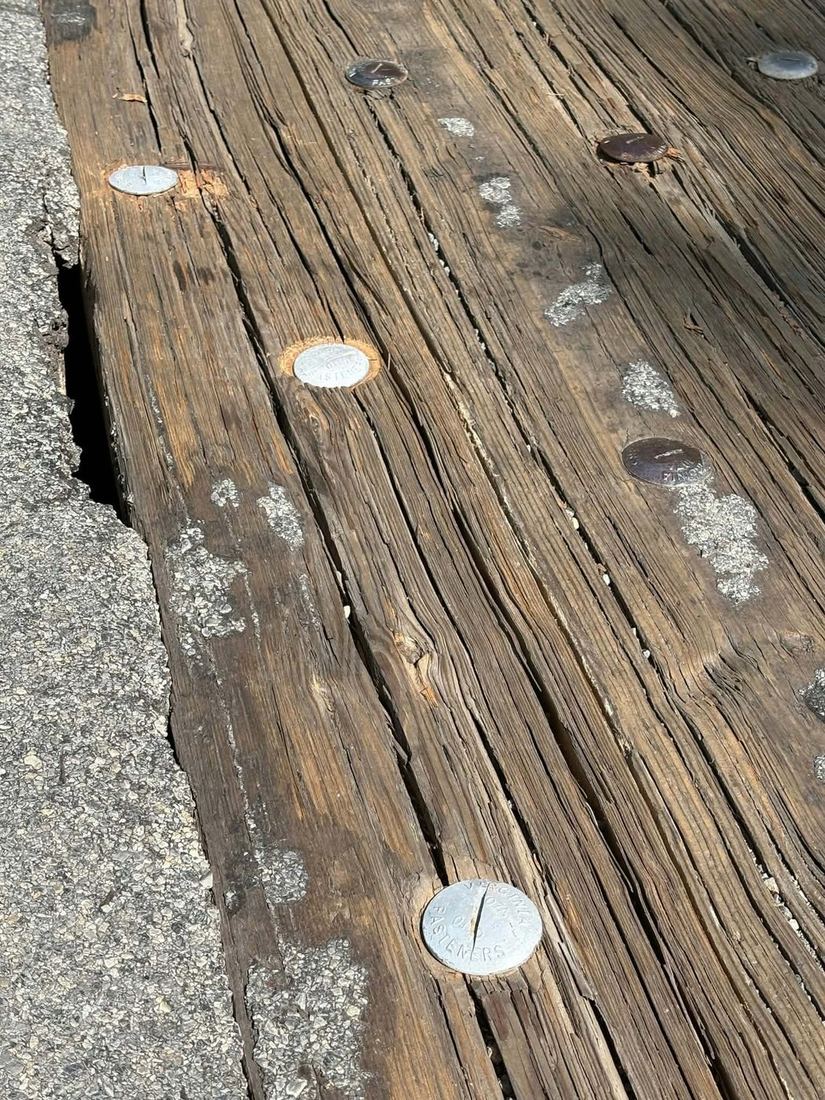
The bridge alone has generated complaints over the years about loose decking, protruding fasteners, and deteriorating materials.
Residents have described hearing and feeling boards move or rattle as vehicles pass over them. Others have found bolts on the ground around the bridge, and at times, the structure emits sounds, residents say, that are akin to the volume of cannon fire when vehicles cross it.
The bridge carries a posted load limit, but the town’s heaviest fire apparatus weighs substantially more when loaded.
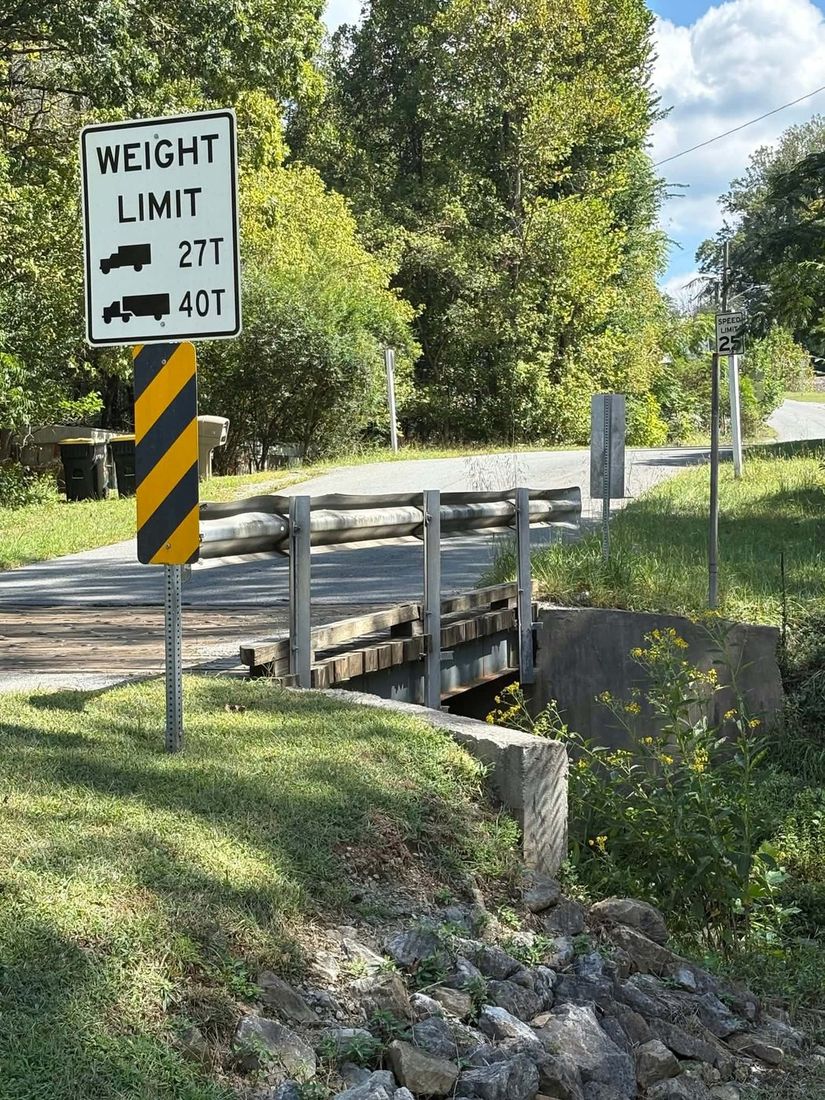
Still, if a fire truck needed to be on the other side of the bridge during a fire, Town Manager Robert Wood does not hesitate.
“It would go there,” he says. “If there’s a fire situation over there, the fire department will get equipment there... The fire trucks can get over there. But obviously, the bridge situation is not ideal.”
Wood cautions that he is not an engineer and says the posted rating should not be read as a precise point at which the bridge would fail. He also says that does not diminish the need to replace it.
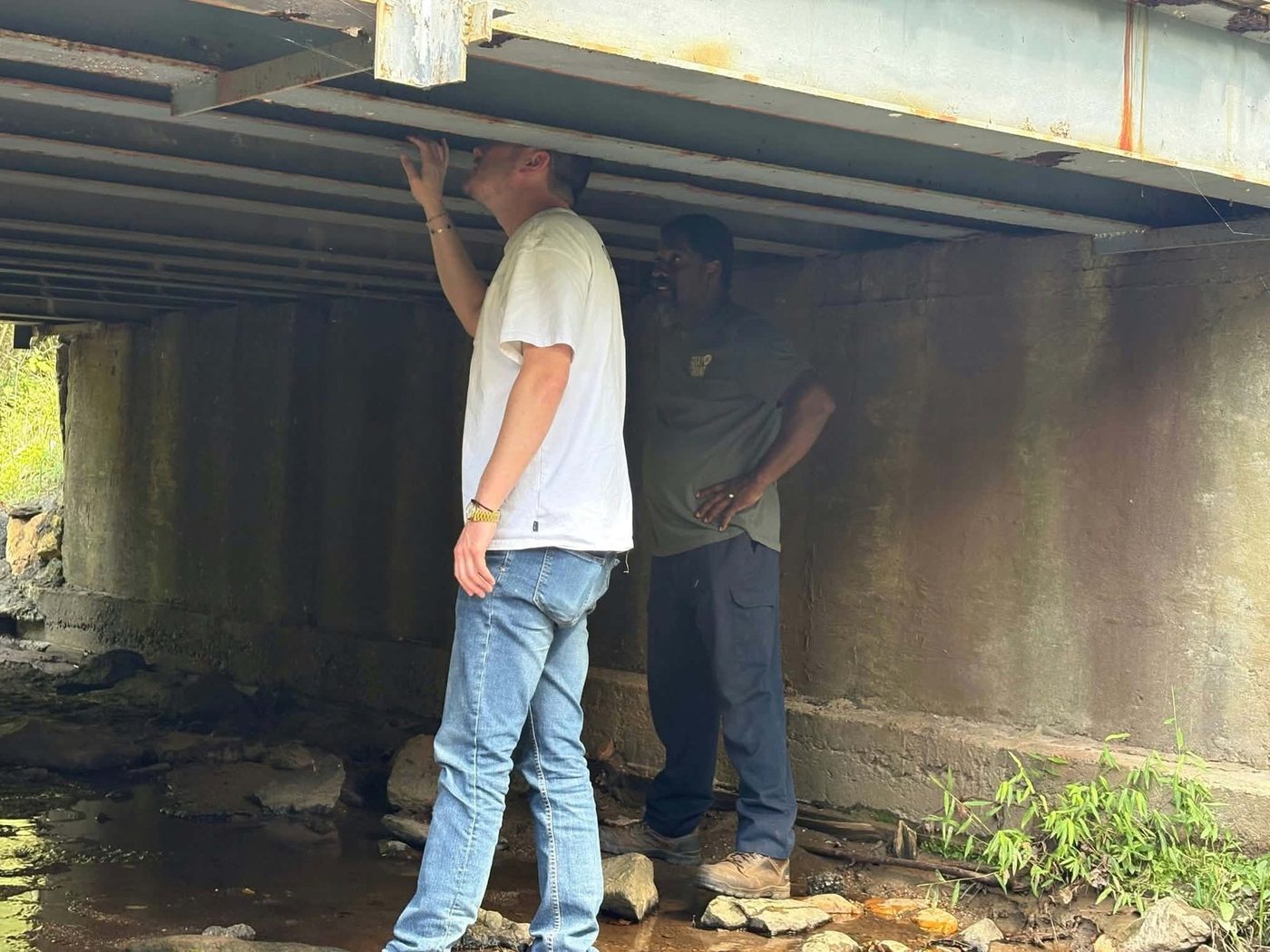
But residents see a larger question:
What happens if the bridge itself becomes unavailable?
Currently, it means no one gets in or out by vehicle. Period.
But that is just one issue.
The railroad presents yet a second problem: stopped trains.
Virginia law addresses blocked crossings directly. Code of Virginia § 56-412.1 says it is unlawful for a railroad to “obstruct for a longer period than five minutes the free passage on any street or road.” The statute does not apply when a train is stopped because of a breakdown, mechanical failure, or emergency.
For Diamond Avenue residents, even a short blockage can matter.
Billy Ferguson, Franklin County’s former director of public safety, recently experienced the problem himself.
Ferguson now works with a senior-citizen program. Earlier this month, he says, a bus headed into the neighborhood met the problem firsthand.
“We were going over there to pick up some folks to take them shopping,” Ferguson says, “and the bus couldn’t cross the track because the train was sitting there.”
There was no emergency that day, and Ferguson says the train moved within about five to 10 minutes. But to someone who spent years in public safety, five or 10 minutes is not necessarily a small number.
Ferguson frames the situation through the eyes of emergency response, not inconvenience.
“Five or 10 minutes—if the house is on fire—a fire doubles in size every 30 seconds,” Ferguson says. “And, you know, if you’re not breathing, you got four to six minutes (before) brain damage occurs.”
During Ferguson’s tenure as public-safety director, he says county officials even met at the site with representatives of Norfolk Southern to discuss whether anything could be done at the crossing.
Ferguson says they discussed whether the track could be elevated or relocated. Railroad representatives, he recalls, were sympathetic but indicated major changes were unlikely. They also discussed breaking a stopped train to create an opening.
“That’s true if it’s stopped there,” Ferguson says. “But if it’s broke down...you can’t move the train.”
And in an emergency, he says, the distinction is measured in time residents may not have.
“If it’s a fire or health emergency, we’re talking seconds and minutes. We’re not talking 45 minutes. We need 45 seconds that we can get through.”Billy Ferguson, former Franklin County director of public safety
A problem residents know well
For the citizens who live beyond the tracks, none of this is theoretical. They are acutely steeped in the situation.
Alice Leavelle grew up in the neighborhood. Her father lived there for 94 years, she says, and the access problem reaches farther back than her own memory.
“I don’t think we should have to fight these many years for access,” Leavelle says, “It should be the right for every neighborhood.”
She worries about more than trains. Bad weather, power outages, or any emergency can turn one entrance into a much bigger problem.
“People need to have access in and out,” she says. “If it was a natural disaster over here, people would have to walk out.”
Linda Carr Patterson, who also lives in the neighborhood, puts the request more simply.
“They need to get it fixed,” she says of the bridge. “And another way out.”
Rev. Vandal Muse has watched the issue cycle through public discussion for years. He says residents were once put on what they understood to be a 10-year plan.
“Then the 10-year plan was up; they trying to put us on another 10-year plan,” Muse says. “They’re spending money everywhere else, but over in that area. We pay our taxes like everybody else. And we’re not getting any results on it.”
For some residents, the length of that wait has one determining factor:
Race.
“It was just quite simple,” Leavelle says. “It’s a Black neighborhood. We don’t always get first priority.”
Muse does not hedge, either.
“I think the hold-up is because we’re predominant Black out there,” he says. “We pay as much tax as anybody else.”
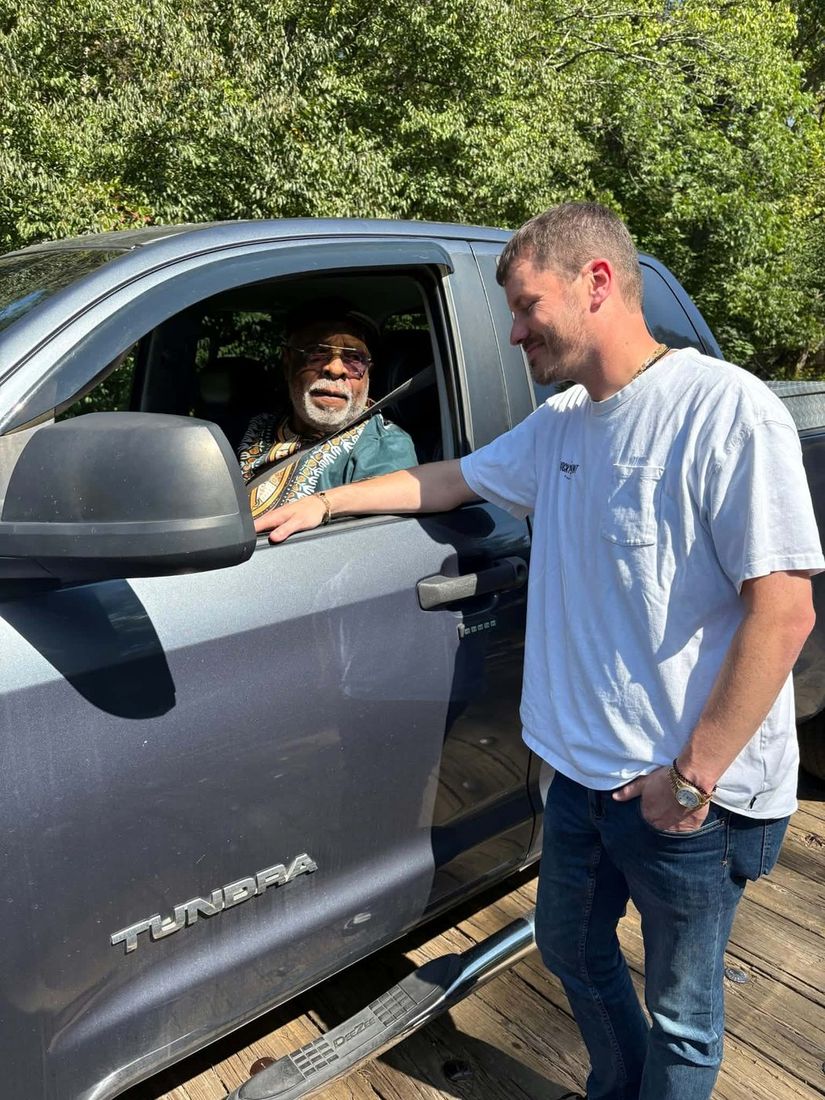
Eric Anspaugh, president of the Franklin County NAACP, approaches the issue through the same larger history of race and voice. He stops short of claiming that racial discrimination alone caused the road project to languish, but he says Black residents have spent generations fighting to be fully heard.
“Our Black brothers and sisters have been treated so unjustly, and so unfairly, and so oppressively, for so long,” Anspaugh says. “A lot of voices have been speaking out over the years, but they’re still trying to get a full voice.”
Perdue sees the neglect through a different lens. He says he cannot explain the decisions made decades before his administration and does not believe race drives the town’s response today. But he agrees that the neighborhood’s economic status has mattered.
“It’s probably realistically because it’s a predominantly poor area,” Perdue says. “That’s why nobody’s ever done anything about them.”
In a later follow-up, Perdue goes further.
“This is an area that I think has been forgotten about. If they were million-dollar homes, I don’t think we’d be having this conversation.”Rocky Mount Mayor Holland Perdue
Perdue rejects the idea that race explains his own administration’s actions, saying he cannot speak for what officials were thinking 50 or 60 years ago.
Regardless, residents look at the decades without a second exit and draw their own conclusion.
“We’re just tired,” Muse says. “We’re sick and tired. We need something done. We need it done as quick as possible.”
Leavelle is just as skeptical of another round of promises.
“Action speaks louder than words. And I think we have had enough words already. Words are just words at this point.”Alice Leavelle, who grew up in the neighborhood
Sidewalks, budgets, and priorities
One comparison raised by residents involves the sidewalks recently built along Tanyard Road.
“They’re building on the sidewalk, coming up Tanyard Road,” Muse says.
To Muse, the new sidewalks are a visible reminder of work being completed elsewhere while Diamond Avenue residents continue to wait.
Perdue says the comparison overlooks how municipal capital projects are funded. The Tanyard sidewalk work, he says, was already in the town’s capital improvement program.
“That was budgeted already,” Perdue says. “It wasn’t like we could just turn around and undo what we’d already budgeted and planned to do.”
He says the project has been in the works for several years.
“All this is really budgetary stuff,” he says. “It’s not like...we’re just sitting on money saying, ‘OK, let’s go spend it here today.’ That’s not how it works.”
Wood says Rocky Mount operates with both an annual budget and a five-year capital improvement plan, and projects can move as funding becomes available.
“If we suddenly get a grant for something, it might move up on the list,” Wood says. “Or if we can’t find the funding, we might move it back on the list.”
The argument over priorities, however, is not limited to sidewalks.
While Highland Hills residents wait for money to solve a decades-old access problem, Franklin County and regional partners are moving ahead with a federally funded study of another transportation corridor: Route 122 toward Smith Mountain Lake.
On Sept. 18, the West Piedmont Planning District Commission announced a $1,657,148 federal RAISE grant for a comprehensive Route 122 corridor study and master plan in Franklin and Bedford counties. Franklin County helped initiate the effort in 2023, when county staff approached the commission seeking grant opportunities to update the Route 122 corridor plan.
And one of the problems the study will examine sounds familiar.
The Route 122 study will look at “improved connectivity and redundancy” along the corridor and analyze the potential need for a second bridge span across Smith Mountain Lake so another crossing would be available if the existing bridge becomes inoperable.
The Route 122 money is planning money, not construction money, and the transportation issues surrounding a major regional highway are not identical to those facing a small residential neighborhood. The money also is not interchangeable with town sidewalk funds or a Diamond Avenue construction appropriation.
But the parallel is difficult to miss.
In both places, officials confront the same fundamental public-safety question: What happens when a critical piece of transportation infrastructure becomes unusable, and there is no nearby redundant route?
There is another distinction. Franklin County helped initiate the Route 122 grant effort. That raises a question for Diamond Avenue: During the years the neighborhood remained under county jurisdiction—years in which county officials repeatedly studied possible alternate routes but never built one—why wasn’t a similar planning-grant strategy pursued for Diamond Avenue?
That question does not mean Diamond Avenue would have qualified for RAISE funding, much less that an application would have succeeded. But it adds another layer to residents’ frustration as they watch more than $1.6 million go toward studying what comes next on another Franklin County transportation corridor while they are still waiting for a second way out.
A Town problem now
For much of the history residents are talking about, Diamond Avenue was not inside Rocky Mount.
That changed with a December 2025 boundary adjustment that brought the neighborhood into town jurisdiction.
The town’s current proposal includes replacement of the aging bridge and creation of another connection between Diamond Avenue and Sycamore Street. The estimated cost is approximately $14.2 million.
Rocky Mount sought state funding, but the request was not ultimately included in the state budget.
Perdue says that means the town also has to begin thinking about its own contribution.
“We’re going to start talking in this budget cycle about what money we need to start setting aside,” he says.
That could become particularly important if future state or federal money requires a local match.
The statement is not an appropriation of $14.2 million, nor a promise that construction is imminent. But after decades of proposals that never became pavement, it marks a shift from simply identifying the problem toward discussing what local money might be needed to help solve it.
For residents who have waited through those decades, however, finding the money is only part of what happens next. They also want a voice in whatever solution ultimately takes shape.
That is where Anspaugh says the NAACP sees its role—not taking ownership of the neighborhood’s fight but helping make sure the people who live there remain at the center of it.
“We want to add our voice to theirs,” he says. “We need to support them and allow them to drive the bus.”
For the people who live there, however, plans and funding requests eventually come back to the same questions.
Can they get out?
Can an ambulance get in?
Can a fire truck reach them if a train is across the tracks?
And if something happens to the bridge, what then?
More than one attempt
The most striking discovery may be that giving the neighborhood another way out is not a new idea.
Not even remotely.
Former town officials remember discussing connections between Diamond Avenue and Sycamore Street years ago.
Former Town Manager James Ervin remembers routes being drawn around the time the bridge was repaired in 2008. Regional transportation planners put Diamond Avenue into a long-range transportation plan. A proposed Route 40 bypass once figured into the equation as well.
County officials later walked possible routes. An electric utility once built a temporary access road behind Lilly's Leisures, and county officials considered whether it could remain as a gated emergency route.
They talked with landowners. They talked with Norfolk Southern. They looked at maps, wetlands, costs and Sycamore Street.
They talked. And they talked. And they talked some more.
Again and again, another way out appeared possible.
And again and again, it disappeared.
Ferguson watched that cycle during a 33-year career with Franklin County, including his time as director of public safety.
“This would bubble up,” Ferguson says. “It would always...be on a front burner for a while, and...then we’d wait ‘till next year, and something bubbled up.”
Ferguson says that, to his understanding, the county never created a dedicated stream of money to keep the project moving from one burst of attention to the next.
“To my knowledge, it’s never been any money set aside,” he says. “This is not something that’s been a one-year or two-year thing. I mean, this has been going on for years.”
For Ferguson, that is one of the missed opportunities.
“Probably some money could have been set aside over five or 10 years or something,” Ferguson says, “and...may have an outcome by now.”
Then Ferguson puts his frustration more plainly.
“I’m just kind of disappointed in the county,” he says. “It would kind of flare up and get real heated for a while and go on for four, five, six months, and then it’ll kind of get pulled off the radar and...nobody would ever address it.”
There is no shortage of proposed ways out of Diamond Avenue.
There never really has been.
The question is what happened to all of them?